Views: 0 Author: Site Editor Publish Time: 2025-11-15 Origin: Site


From the perspective of feeling
Insulators
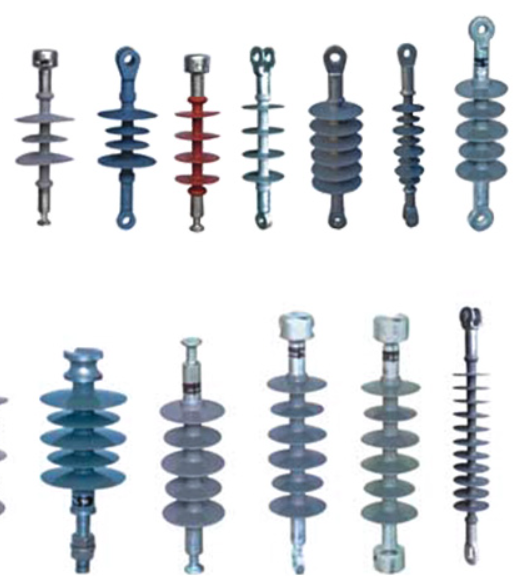
Usually, the insulator looks iconic and monumental. Such as on a high-voltage transmission tower, who appear as a series of glazed porcelain in long chains or composite polymer "skirts" stacked arranged as a single column is the insulator. Those design in the insulators are to prevent electricity from arcing to the grounded support structure. Who watched the previous episode may know their colors are white, brown or gray usually which for allowing engineers to easily spot contamination, cracks or damage though from a distance.
In addition, The feel of touching an glass-like glaze insulator is hard, heavy and cold. However, the feel of touching a composite polymer insulator is rigid and the silicone rubber sheds are softer which design for water-repelling.
Cold-Shrink Cable Outdoor Termination
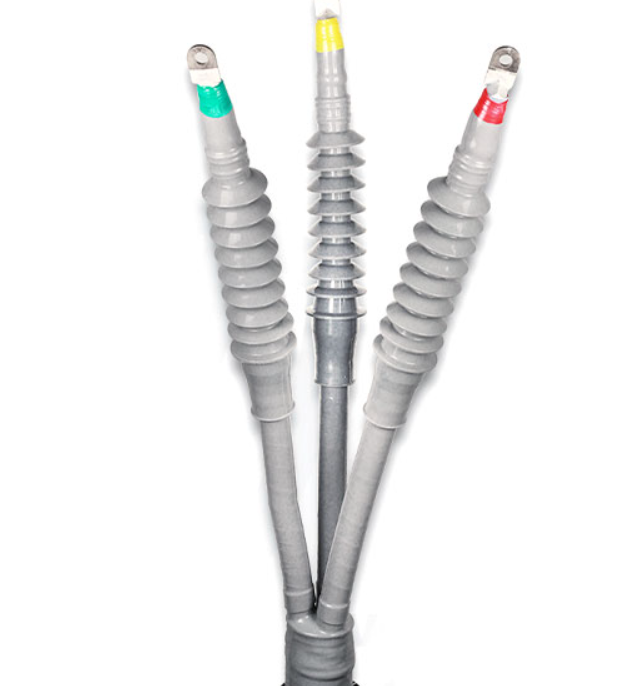
Judging from appearance alone, many people would mistake outdoor shrink-fit terminals for gray insulators. In fact, they do look somewhat similar, but they feel different to the touch.
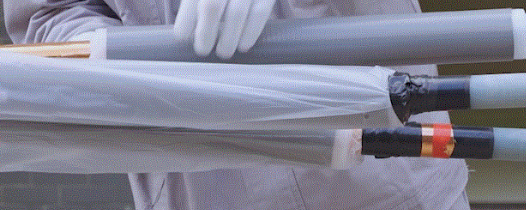
In its pre-installed state, a cold-shrink termination resembles a short and corrugated tube which coiled tightly onto a removable plastic core. However, once the core is removed, the unit expands seamlessly to form a tight sheath around the cable end. The final product looks like a monolithic part of the cable system which with no tools required for its transformation.
The feel of touching cold shrink cable outdoor termination is smooth and tough. Compared to the rigidity of an insulator, its tactile feel is more like a layer of skin tightly adhering to the cable. The design of cold shrink cable outdoor termination is for not only slightly compressed, absorbing vibration and physical stress without cracking but also withstand electrical stress, weather, UV radiation and temperature fluctuations without becoming brittle.
Raw Materials
Insulators
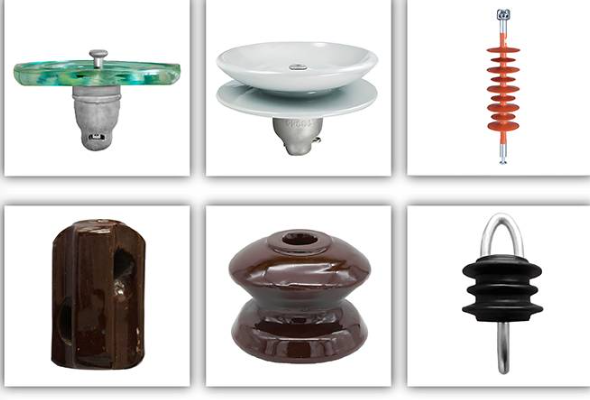
Porcelain/Glass: The materials of the Porcelain/Glass Insulator is classic inorganic. Which created by being fired at extreme temperatures (over 1200°C) fixing with a blend of clay, feldspar and quartz to create a hard, weather-resistant material.
Polymer (Composite): The materials of the Polymer (Composite) Insulator is a rigid fiberglass core surrounded by a jacket of silicone rubber or EPDM (Ethylene Propylene Diene Monomer). The reason why add the rubber is for the Insulator to provide exceptional resistance to electrical arcing and tracking.
Cold-Shrink Cable Outdoor Termination
The Elastic Memory: The materials of cold-shrink cable outdoor termination is EPDM (Ethylene Propylene Diene Monomer) or Silicone Rubber. These materials are chosen for their exceptional weatherability, UV resistance, and ability to maintain elasticity over decades.
The Core: The materials of the cold-shrink cable outdoor termination core is a removable plastic which often a helically-wound strip.
Internal Components: Inside the cold-shrink cable outdoor termination, you'll find "stress control" layer. The "stress control" layer often made of conductive rubber or a semi-conductive polymer. The reason of why design the "stress control" layer for cold-shrink cable outdoor termination is smoothly redistributes the intense electrical field at the end of the cable shield to prevent dangerous localized electrical stresses.
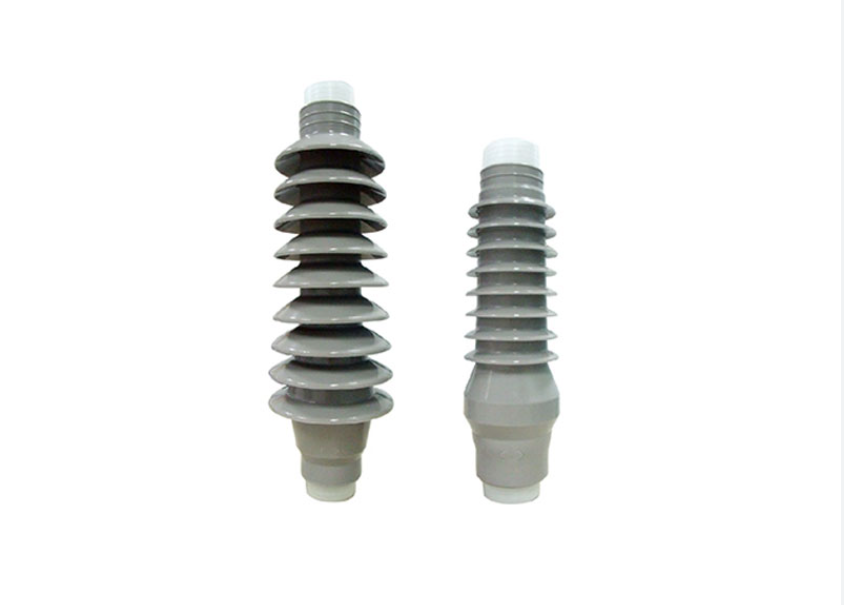
Furthermore, both the polymer insulators and cold-shrink terminations all need to cross-linked elastomers (like silicone and EPDM) designed for long-term outdoor stability. Which is focused on hydrophobicity, UV resistance and resistance to environmental degradation.
Production Process
Insulator
The production process for porcelain Insulator is mixed with water into a slip to make raw materials and cast in molds to form the shapes. Then, glazing and firing in kilns to vitrify them into a hard inorganic mass. Finally, Metal end-fittings are cemented on. However, the finally process for polymer types is extruding and vulcanizing the rubber housing directly onto the fiberglass rod in a mold to form the sheds.
Cold-Shrink Termination
Firstly, the EPDM or Silicone compound is mixed with all necessary additives and then injection into recovered shape. Secondly, the molded part is created the cross-linked elastic polymer. Then, the fully cured termination is mechanically stretched and a plastic core is wound inside to hold it in its state. Finally, the unit is packaged without kinks.
Application
The Insulator:
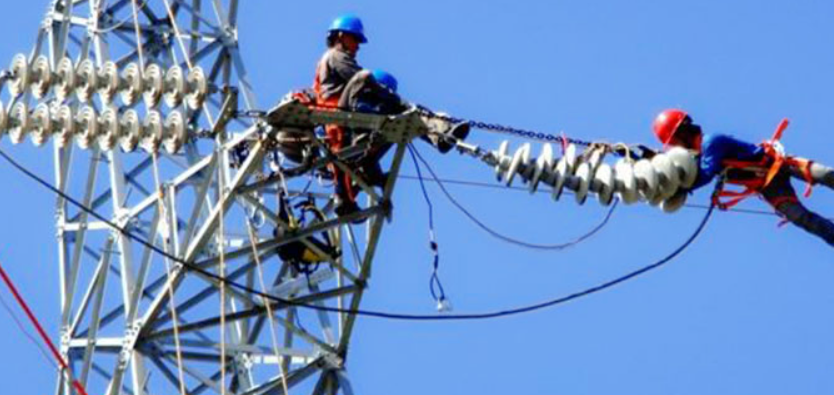
Object & Environment: Usually used outdoors on power transmission towers, substations and transformer bushings. It’s exposed to the harshest conditions which as sun, wind, rain, ice and pollution.
Steps: Insulators are hoisted by cranes fixing onto structures. Then, the conductor is secured to them.
The Cold-Shrink Outdoor Termination
Object & Environment: Protecting the exposed end of a medium or high-voltage cable where it connects to a transformer, switchgear or overhead line.
Steps: First of all, the cable end is stripped to expose specific layers of conductor, insulation and semi-conductor shield according to a precise "take-off" length. Secondly, make sure the termination is slid over the prepared cable end before the final connection is made to the equipment. Then, the technician simply pulls the plastic core strip to allow the EPDM sleeve to contract instantly and uniformly over the cable. Finally, the cable conductor is then connected to the terminal. What’s the termination's job is to seal the interface and manage the electrical stress at the cable end.