Views: 0 Author: Site Editor Publish Time: 2025-11-12 Origin: Site


Insulator
Electrical Isolation: Isolation creates a high-resistance barrier between a live conductor which like a wire or power line and any other conductive surface which like a utility pole, a metal tower or another wire.
Physical Support: Isolation often mechanically supports and positions the conductor, holding it firmly in place against environmental forces like wind, gravity and ice.
From the perspective of feeling
The Insulator
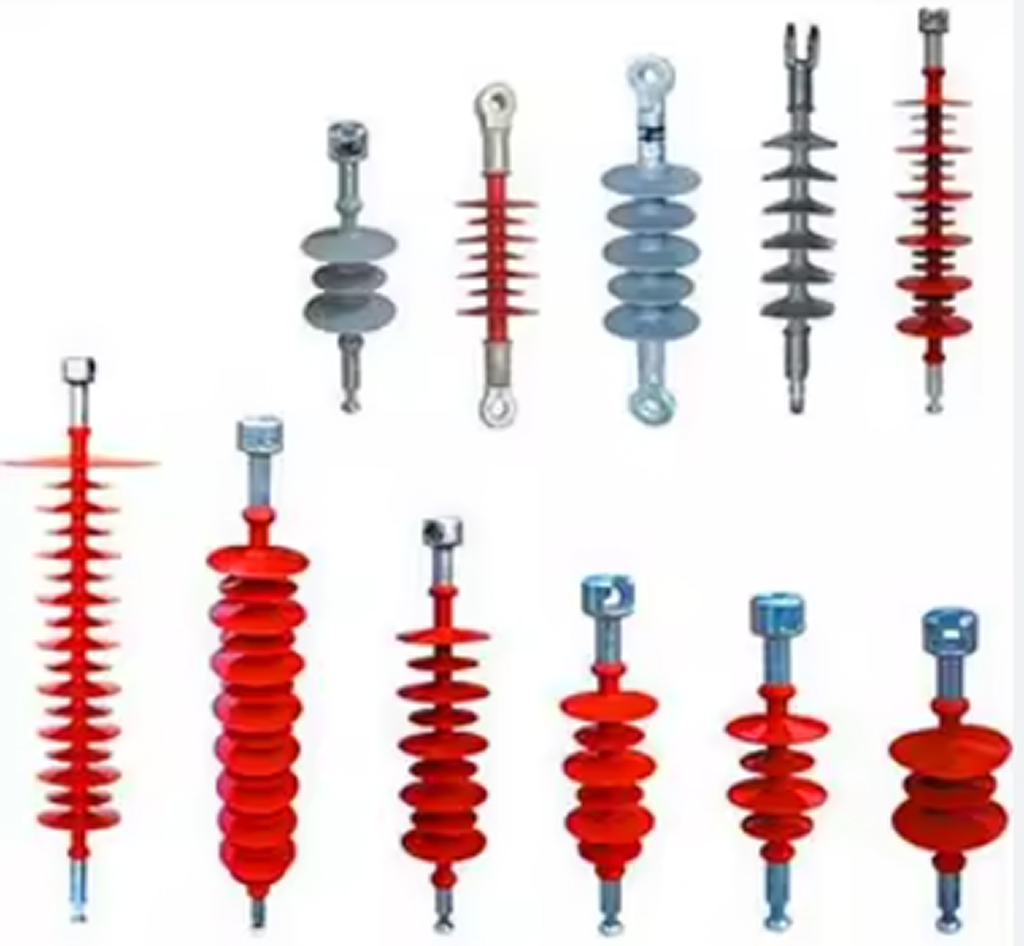
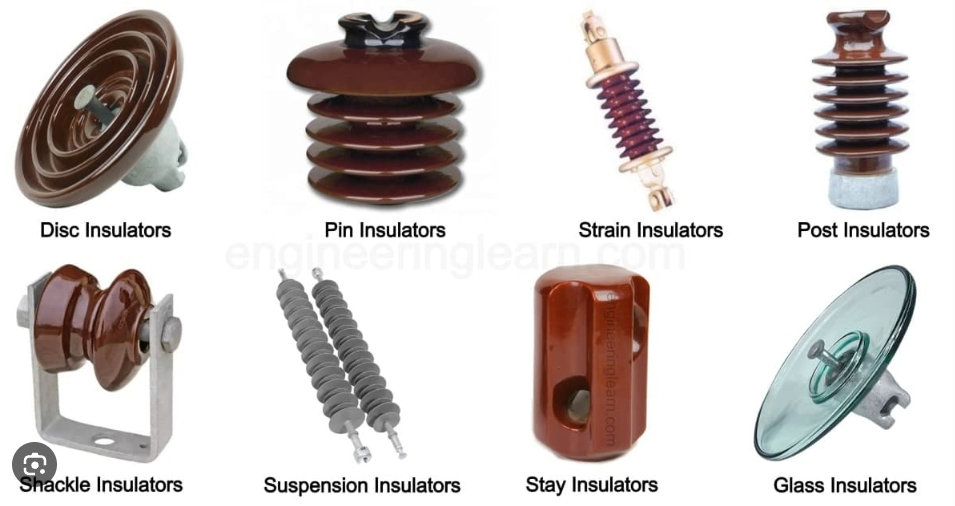
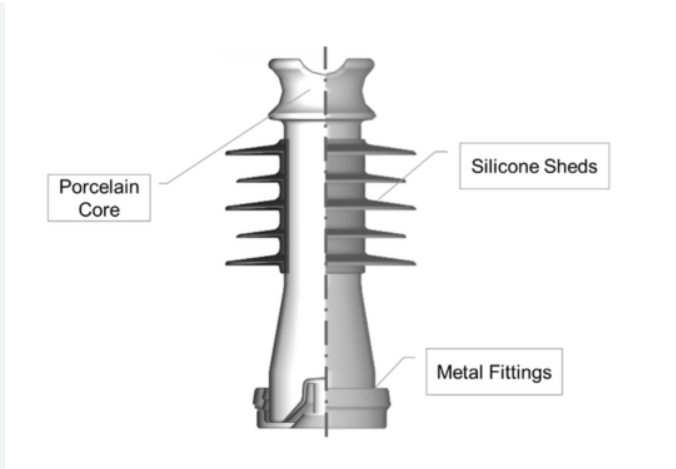
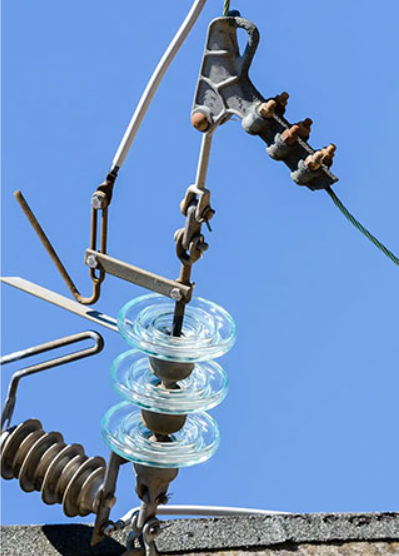
In fact, insulators are often static. On high-voltage transmission towers, they appear as a series of glazed porcelain or glass discs, shaped like bell skirts and stacked in long chains. The ridges create a long and "leaky" path for electricity which forcing any surface current to travel a much longer distance to reach the supporting tower to prevent a flashover. In addtion, Their colors are white, brown or clear which allowing for easy visual inspection for damage or contamination. Now, modern composite insulators, with their solid fiberglass core and rubbery polymer sheds, present a more streamlined, single-piece silhouette.
The feel of a traditional insulator is sturdy. A porcelain insulator is hard, heavy, and cool to the touch, with a smooth and glass-like glaze. However, a polymer insulator offers a different texture. Its core is rigid, but the silicone rubber sheds feel soft, flexible and almost velvety with a property designed to repel water.
The Heat-Shrink Cable Accessory
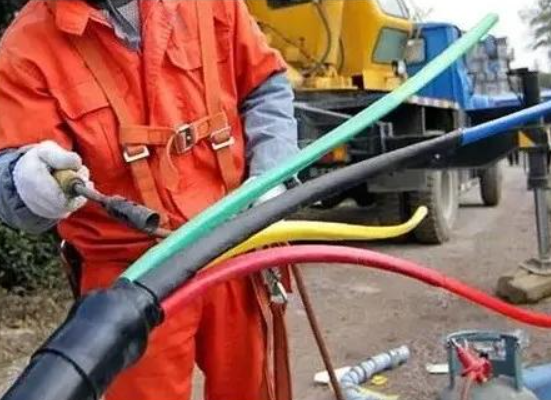
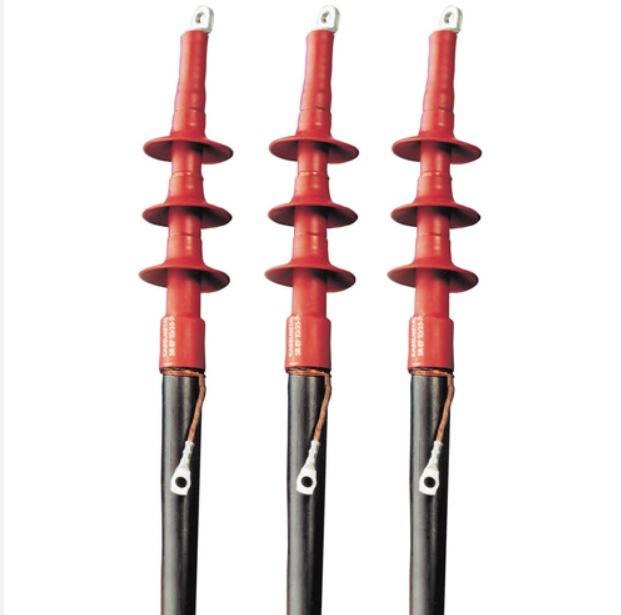
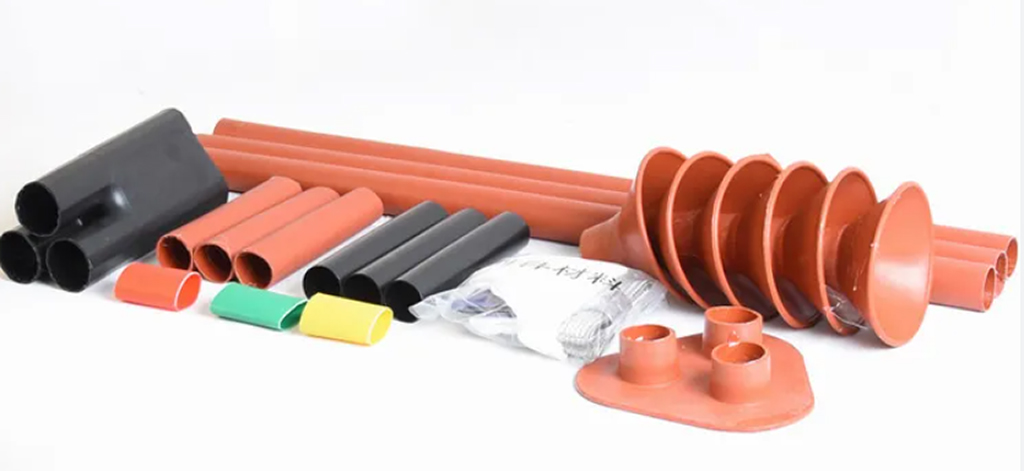
In fact, the heat shrink cable accessories’sleeve, tube or molded shape often in a uniform black, red or white. When heat is applied, it shrinking uniformly and tightly to as little as one-third of its original diameter. The visual cue of a proper installation is a tight, seamless and glossy sheath that leaving no gaps or wrinkles.Before shrinking, it is semi-flexible and slick, allowing it to be easily slid over connectors and splices. After heating, its character transforms completely as a tough skin.
The surface is smooth but firm, offering excellent resistance to abrasion.
Raw Materials
The Insulator
Porcelain/Glass: These are classic inorganic materials. Porcelain is a blend of clay, feldspar and quartz fired at extreme temperatures (over 1200°C) which to create a hard, weather-resistant but brittle material. Tempered glass offers high dielectric strength and the safety feature of shattering completely upon failure.
Polymer (Composite): These represent a shift to advanced organics. They consist of a rigid fiberglass core for strength, surrounded by a jacket of silicone rubber or EPDM. This rubber is infused with fillers like alumina trihydrate which provides exceptional resistance to electrical arcing and fire.
The Heat-Shrink Cable Accessory
The base polymer is irradiated to create cross-linked molecular chains. It is then heated and expanded. When it cools, it retains this "temporary" shape. Reheating it provides the energy for the chains to snap back to their original, "memorized" form.
Both modern polymer insulators and heat-shrink accessories rely on engineered, cross-linked polymers designed for long-term stability.
However, the insulator uses this chemistry for static strength, while the heat-shrink uses it for dynamic transformation.
Production Process & Application
Insulator
Forming: For porcelain, raw materials are mixed with water into a slip which is cast in molds to form the shapes.
Firing: The "green" insulators are glazed and fired in kilns, vitrifying them into a single, hard mass.
Assembly: Metal end-fittings are cemented on. For polymer types, the rubber is extruded and vulcanized directly onto the fiberglass rod.
Object & Environment: It is the macro-scale workhorse of the grid. Used outdoors on power transmission towers, substations and transformer bushings. It is exposed to the harshest conditions as sun, rain, ice and pollution.
Steps: Installation is a heavy-duty mechanical process. Insulators are hoisted, often by cranes or helicopters, and bolted or clamped onto structures. The conductor is then secured to them. The focus is on mechanical integrity and electrical clearance over meters of space.
Heat-Shrink Manufacturing
Extrusion & Cross-linking: The polymer is extruded into a tube and then bombarded with high-energy electrons in an accelerator, creating the cross-linked "memory".
Expansion: The tube is reheated and mechanically stretched over a mandrel to its larger, temporary size.
Coating: The expanded tube is cooled, coated with sealant adhesive, and cut to length.
Object & Environment: It is the micro-scale surgeon of the wiring world. It is used for splicing, terminating, and repairing cables in diverse environments: buried in soil, submerged in water, inside engine bays, or on circuit boards.
Steps: Application is a meticulous, craft-oriented procedure:
1. Preparation: The cable is stripped and cleaned.
2. Critical Step: The accessory is slid onto the cable before making the connection.
3. Connecting: The wires are joined .
4. Shrinking: Heat is applied evenly from the middle outward. The technician watches as the material shrinks and a bead of melted adhesive appears, signaling a perfect seal.